
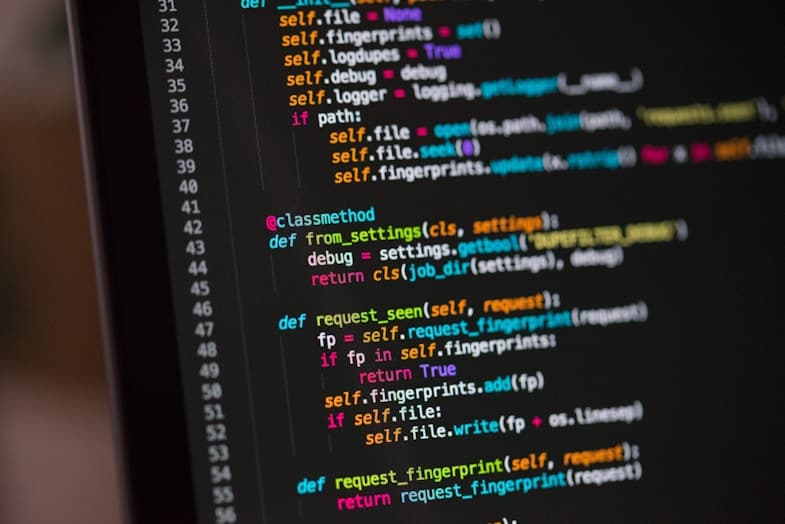
The case for teaching children to code is often made in career terms — that programming jobs are plentiful and well paid. That argument is true but incomplete, and it puts many families off, since most children will not become software engineers.
The stronger case is that coding teaches a particular way of thinking, and that way of thinking transfers.
What coding actually teaches
Writing a program requires breaking a problem into steps precise enough for a machine to follow. That is decomposition, and it is the same skill a student uses to structure an essay or work through a multi-step maths problem.
Code also provides immediate, impersonal feedback. A program either works or it does not, and the reason is discoverable. Students learn to treat a failure as information rather than judgement — a habit that is difficult to teach directly and valuable well beyond programming.
Debugging is the real lesson. A child who learns to find their own mistake methodically has learned something that applies to every subject they will study.
Where to start, by age
Younger children generally begin with visual, block-based programming, where instructions snap together like puzzle pieces. This removes typing and syntax from the equation, so attention goes to the logic. Students build animations and simple games, and the results are visible immediately, which sustains interest.
Around the point where a student is comfortable with those ideas — sequence, loops, conditions — text-based programming becomes appropriate. Python is a common first text language because its syntax is uncluttered, so the gap between thinking and writing is small.
Physical computing sits well alongside both. Connecting code to something that moves or lights up makes an abstract idea tangible, and tends to hold the attention of students who find purely on-screen work less engaging.
What to look for in a course
- Projects the student chooses, not only exercises they complete.
- Room to make and fix mistakes, rather than following steps to a predetermined result.
- Progression that follows understanding rather than a fixed timetable.
- An explicit focus on debugging, not just on producing working code.
A realistic expectation
Most children who learn to code will not pursue it professionally, and that is a reasonable outcome. The point is not to produce programmers but to give students practice at structured problem-solving in a context where the feedback is honest and the work is visibly theirs.

Ready to See the SmavyDifference? Free Trial Per Subject.
One free 1-hour trial session per subject. Not happy with the tutor? We find another — free — until you're satisfied.